
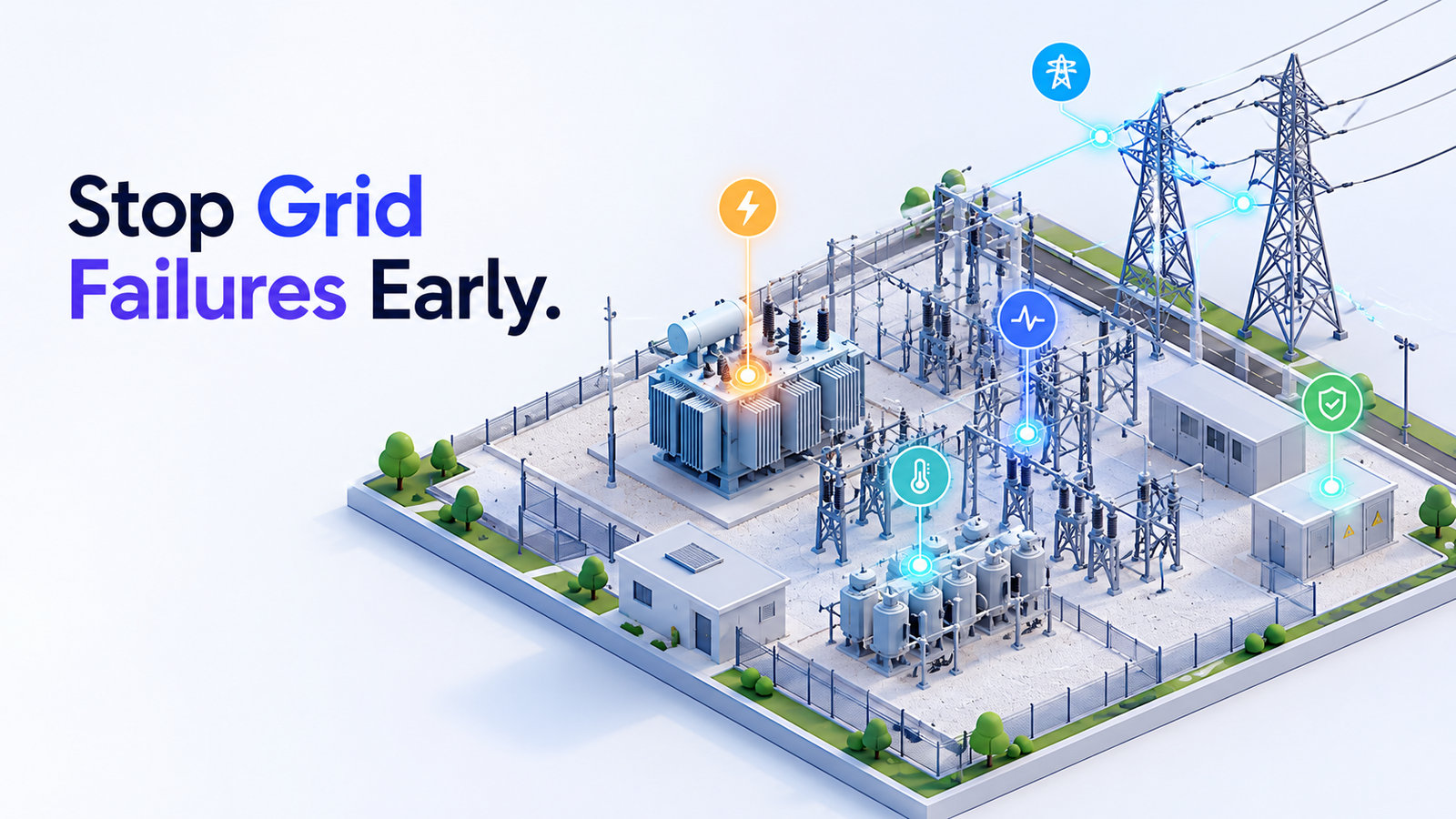
In the energy sector, stability is the only metric that matters. For grid operators, a singular anomaly—a voltage surge, a frequency fluctuation, or a equipment fault—can cascade into a major outage, leading to massive regulatory penalties and lost revenue. Yet, the traditional approach to detecting these anomalies is fundamentally broken, relying on static thresholds that are too blunt for modern, dynamic grids.
The Industry Bottleneck
Most utility companies attempt to manage grid health using legacy SCADA-based rule engines. These systems trigger an alarm only when a parameter hits a hard threshold—for example, when a line temperature exceeds 85°C. This is reactive by design. By the time the rule triggers, the equipment is already under significant stress, and the operational window for corrective action has closed. Furthermore, because these rules are rigid, they struggle to account for the noise introduced by intermittent renewable energy sources like solar or wind, leading to a deluge of ‘nuisance’ false-positive alerts that leave operators desensitized.
This is a multi-crore problem. Beyond the immediate cost of grid repair, utilities face massive intangible losses from degraded asset life and the operational overhead of investigating thousands of irrelevant alerts. For an operations head managing a regional grid, the inability to distinguish between a transient noise pattern and a genuine pre-failure signal is the difference between a stable system and a crisis.
The NexGen Architecture
The solution requires moving from rule-based thresholds to intelligent, pattern-based anomaly detection. We implement (a) streaming ingestion of high-frequency waveform data from smart meters and substations, (b) deep learning-based autoencoders that learn the ‘normal’ operational state of the grid in real-time, adapting to diurnal changes in load and generation, and (c) integration into the central Network Management System (NMS) and Power BI dashboards.
By leveraging deep learning models, our system identifies deviations in signal behavior long before they trigger a hard hardware limit. The integration with your existing NMS ensures that alerts are not just signals, but contextualized insights that include probable cause and severity level. We keep the human in the loop via a verification console, allowing engineers to confirm the root cause—be it a faulty transformer or a solar plant fluctuation—and retrain the model continuously to filter out non-critical operational noise.
Quantified ROI & Business Impact
- 40–60% reduction in false-positive operational alerts.
- Early fault detection of critical substation assets, extending asset life by 15%+.
- Reduced mean time to repair (MTTR) by enabling proactive dispatch.
- Stabilized energy distribution and lower outage frequency.
- Reduced regulatory fines related to grid instability incidents.
Conclusion
AI-driven anomaly detection is no longer optional for a modern, decentralized grid; it is the infrastructure of grid stability. Move from reactive rules to predictive intelligence. Book a free 30-minute AI feasibility assessment at nexgendataminds.com.