
The Industry Bottleneck
In high-precision manufacturing, quality inspection is the silent killer of profitability. Even a minor deviation in an auto-component part can lead to mass rejection, wasting expensive raw materials and thousands of hours of machine time. Plant managers often rely on manual sampling, which inevitably misses micro-defects or operator fatigue-related errors, leading to downstream supply chain disruptions and costly rework. When your rejection rate sits at 5% or higher, you aren’t just losing parts; you are losing your competitive edge in a market that demands zero-defect supply.
The traditional approach of ‘inspecting out’ bad parts is reactive and resource-heavy. By the time a quality inspector identifies a trend, thousands of units might have already passed through the line. This operational blindness is exacerbated by the lack of real-time data correlation, leaving operations heads struggling to identify which machine, shift, or material batch is driving the variability in output quality.
The NexGen Architecture
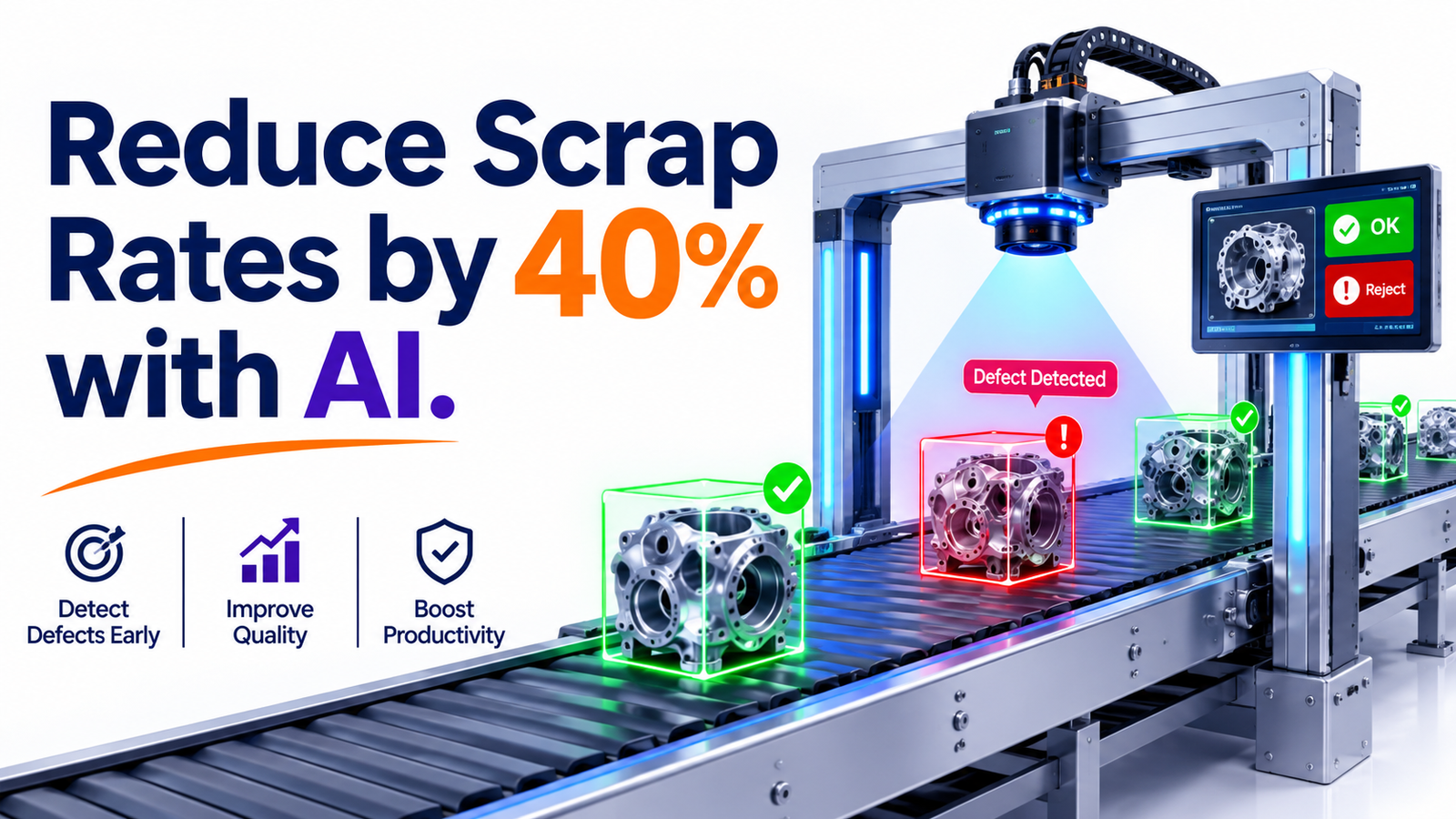
Our solution integrates high-speed industrial cameras directly into your existing assembly line, feeding real-time visual data into an edge AI gateway. We utilize YOLO-based deep learning models, trained specifically on your component’s unique defect patterns—be it hairline cracks in castings, surface finish variations in machined parts, or incorrect orientation in assembly. Data ingestion is lightweight and persistent, ensuring that every unit is scanned in milliseconds without interrupting throughput.
This visual stream is integrated with your MES and ERP through secure Python microservices, allowing for automated triggers: if the AI detects a consecutive defect pattern, it flags the specific machine controller to pause for recalibration before the next batch starts. Human-in-the-loop controls allow inspectors to review edge-case flags on a central dashboard, which continuously re-trains the model to handle new variations. By keeping the processing at the edge, we eliminate reliance on cloud latency, ensuring instantaneous feedback loop implementation for high-speed production environments.
Quantified ROI & Business Impact
- Reduction in scrap rates by 30–40% within the first three months.
- Decrease in manual inspection labor hours by 60% per shift.
- Prevention of ₹15–20 lakh in annual raw material waste for mid-size units.
- Payback period of 6 to 9 months post-deployment.
- 100% traceable quality logs for every unit serialized.
Conclusion
Real-time visual inspection is no longer a luxury but an operational necessity for modern assembly lines. By closing the loop between defect detection and machine control, you protect your margins and your reputation. Book a free 30-minute AI feasibility assessment at nexgendataminds.com.