
The Industry Bottleneck
Warehouse operations are often trapped in a cycle of reactive decision-making, where labor allocation, loading dock scheduling, and slotting strategies are based on static planning rather than dynamic reality. When transport ETAs are inaccurate—due to weather, traffic patterns, or last-mile disruptions—warehouses suffer from either costly idle labor waiting for arrivals or severe congestion when multiple shipments arrive simultaneously. This lack of visibility into real-time arrival accuracy remains the primary driver of operational inefficiencies in modern logistics.
The traditional approach relies on static promises from carriers, which rarely account for the complexities of modern multi-modal transportation. Managers are forced to build in massive buffers to cover these uncertainties, leading to poor space utilization and missed throughput targets. As e-commerce expectations demand faster turnaround times, the margin for error in warehouse scheduling is shrinking to near-zero. The inability to dynamically re-plan slotting and resource allocation in response to changing arrival times is the bottleneck preventing logistics firms from scaling efficiently.
The NexGen Architecture
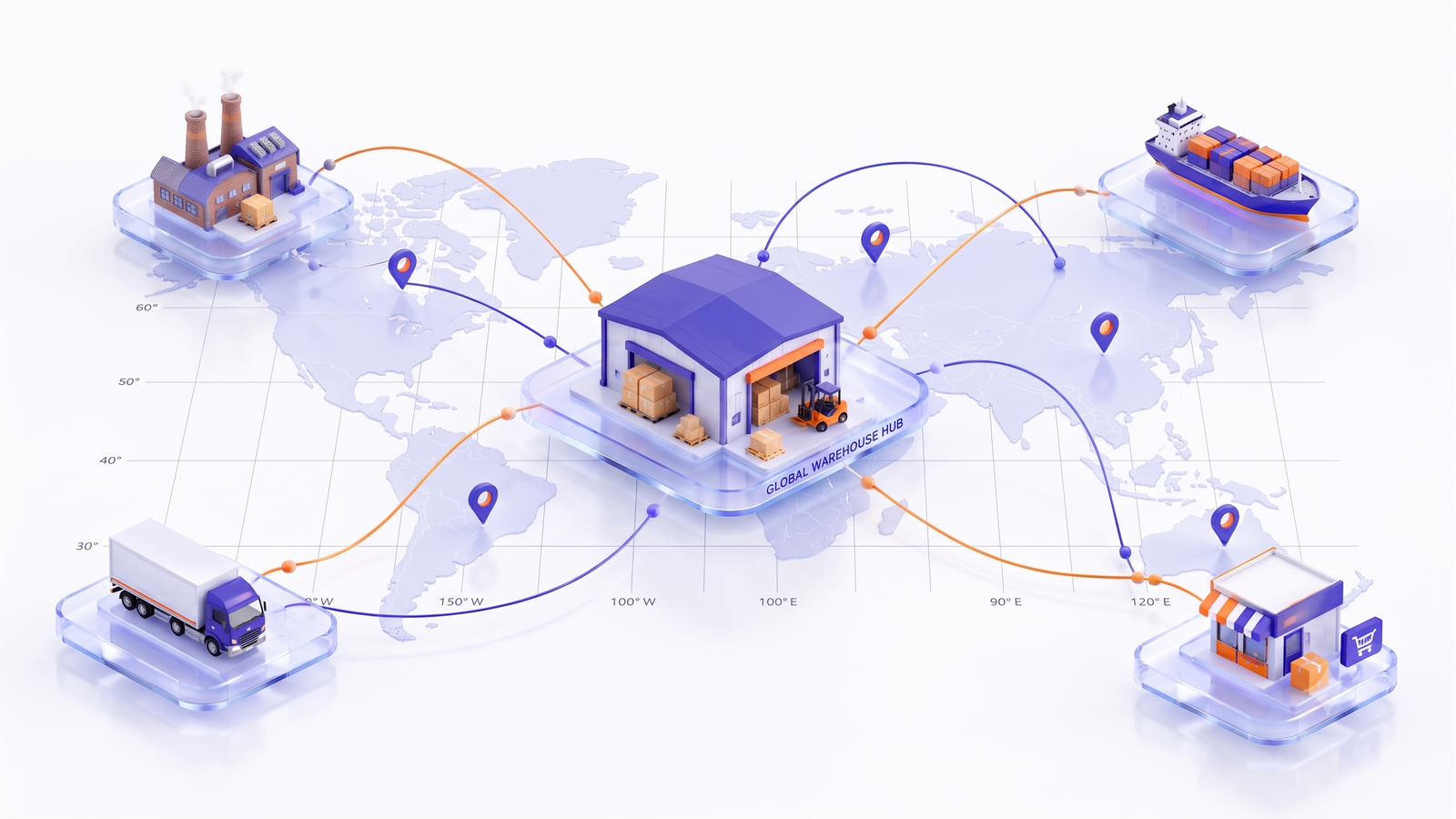
NexGen’s predictive logistics architecture leverages real-time fleet telemetry data, historical traffic patterns, and weather feeds to provide high-precision ETA forecasting. Our engine uses an ensemble of gradient-boosted decision trees and temporal convolutional networks to continuously update expected arrival windows for every inbound shipment. Unlike standard GPS-based tracking, our model integrates these predictions directly into your warehouse management system (WMS) and ERP.
The system automatically triggers re-slotting workflows: if a high-priority shipment’s ETA shifts, the architecture instantly re-calculates dock availability and notifies floor supervisors to re-allocate labor resources. By mapping arrival predictions to internal warehouse throughput capacity, we create a dynamic scheduling loop. This ensures that resources are deployed where they are needed exactly when they are needed, reducing the ‘bullwhip effect’ inside the four walls of the warehouse.
Finally, we wrap this architecture in a Power BI dashboard suite that provides end-to-end visibility of your transport network, allowing operations heads to monitor arrival reliability trends by carrier, route, and lane. This data provides the strategic leverage needed to renegotiate carrier contracts and optimize regional distribution strategies.
Quantified ROI & Business Impact
Logistics clients utilizing our predictive ETA framework report a 35% increase in dock utilization efficiency, a 22% reduction in labor overtime costs, and a 28% improvement in outbound shipping schedule reliability. By transforming transit uncertainty into actionable foresight, businesses can reclaim millions in operational throughput capacity annually.
Conclusion
Predictive ETA is no longer just a tracking feature—it is the brain of a modern warehouse. NexGen Data Minds provides the intelligence to anticipate the future and optimize the present, ensuring your logistics chain remains resilient, fast, and highly profitable.