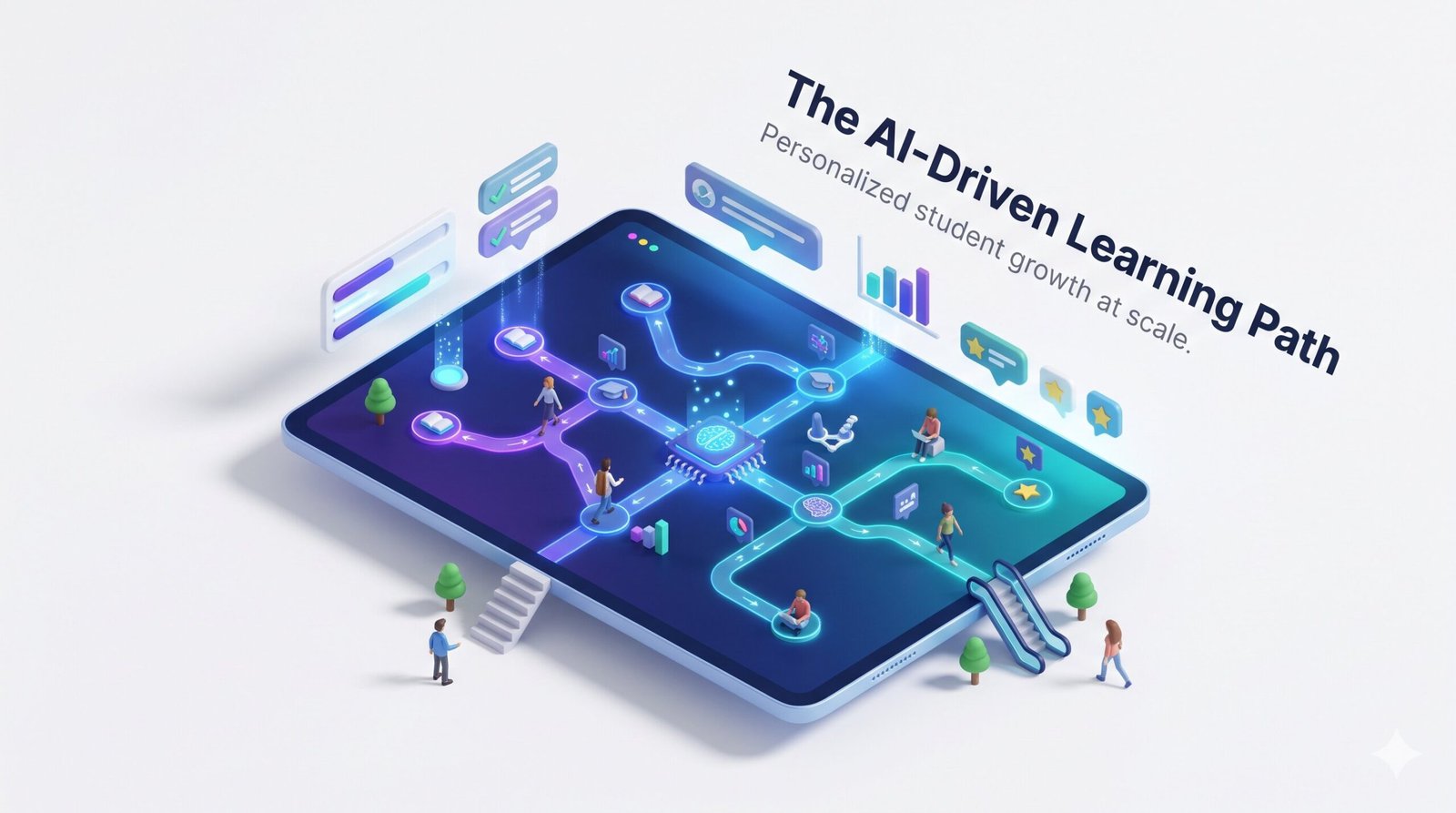
Educational institutions are drowning in data, yet student outcomes remain static. The gap between generic curriculum and individual mastery is a persistent failure point in modern edtech.
The Industry Bottleneck
For EdTech platforms and large private institutions, the core challenge is the lack of adaptive feedback. Administrators spend thousands of hours manually grading assessments and mapping student progress to learning goals. When a student struggles, the intervention is often too little, too late—leading to high dropout rates and stagnant performance metrics.
Teachers are bogged down by administrative load, unable to provide personalized pathways for cohorts larger than 30. This manual bottleneck makes true personalization a luxury that few institutions can afford, resulting in a system that teaches to the middle and loses the edges.
The NexGen Architecture
Our approach utilizes Retrieval-Augmented Generation (RAG) to build a dynamic Knowledge Assistant that ingests an entire institution’s curriculum, past test performance, and learning resources. By mapping these data points to student interaction logs, the AI identifies specific knowledge gaps in real-time.
We integrate this with existing Learning Management Systems (LMS) and student databases. When a student interacts with the platform, the assistant doesn’t just provide answers; it suggests micro-learning modules based on the student’s unique proficiency curve. The AI pipeline runs locally or in a private cloud, ensuring strict compliance with student data privacy regulations.
Human-in-the-loop controls allow teachers to override model suggestions, ensuring that the technology remains a pedagogical tool rather than a replacement. The integration is designed to work with standard LMS APIs, minimizing disruption to existing workflows.
Quantified ROI & Business Impact
- 30–40% reduction in time spent by teachers on assessment and feedback.
- 20% improvement in student retention rates through early dropout prediction.
- ₹5–8 lakh annual savings per campus in administrative overhead.
- Deployment payback period typically under 6 months.
Conclusion
Personalization shouldn’t be a generic marketing term; it must be an operational reality. By automating the mapping of curriculum to student needs, institutions can finally realize the promise of adaptive learning. Book a free 30-minute AI feasibility assessment at nexgendataminds.com.